

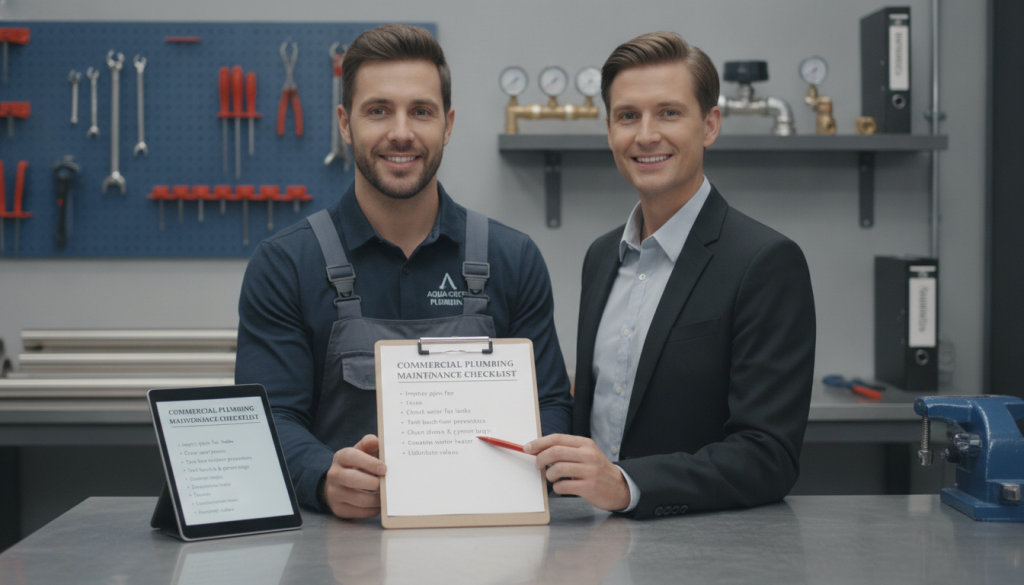
A small leak in one unit can become a major building issue quickly. In offices, retail spaces, and multi-unit properties, plumbing concerns can spread through shared systems and disrupt tenants. A commercial plumbing maintenance checklist gives property managers a repeatable way to inspect supply lines, drains, fixtures, shutoff valves, and water-heating equipment before minor concerns lead to emergency plumbing repairs.
A checklist is a documented list of inspection points and maintenance tasks. It helps owners and managers assign responsibilities, log recurring concerns, and make informed repair decisions over time. Cedar Park Plumbing helps property teams in Cedar Park with routine plumbing service, leak detection, blocked drains, pipe repairs, and larger commercial plumbing needs.
Key Takeaways
- A commercial plumbing maintenance checklist helps identify leaks, drain concerns, and fixture problems early.
- Monthly visual checks, quarterly reviews, and annual system planning can support reliable property operations.
- Maintenance records help managers spot repeat issues, schedule repairs, and coordinate service access.
- Older, high-use, and multi-unit properties may need more frequent inspections.
- Cedar Park Plumbing provides commercial plumbing support for property owners and managers in Cedar Park.
Why a Commercial Plumbing Maintenance Checklist Matters
A commercial plumbing maintenance checklist matters because most plumbing failures begin with small warning signs rather than a sudden breakdown. A drip beneath a sink, a slow floor drain, a running toilet, or a valve that will not close properly can be easy to overlook in a busy building. Regular walkthroughs help managers find these issues earlier and may reduce avoidable emergency calls.
This is especially important for managed and multi-unit properties. One blocked drain can affect several tenants, while a hidden leak can damage walls, flooring, and finishes and may create conditions that support mold growth. Low water pressure, sewer odors, and unreliable hot water can also interrupt cleaning, staff operations, resident comfort, and customer service. A documented checklist lets owners, managers, and HOA boards review the entire system rather than responding to complaints one at a time.
The checklist can also support property owners, investors, and first-time commercial buyers. It provides a clearer record of plumbing condition, repair history, and potential system risks. Cedar Park Plumbing often works with local property teams to review these items during scheduled service visits and determine when a deeper inspection is appropriate.
What to Include in a Commercial Plumbing Maintenance Checklist
A useful commercial plumbing maintenance checklist should cover the components that fail most often and the components that can cause widespread disruption when they do. Start with the water supply line, which is the pipe system that brings fresh water into the building. Inspect supply lines, accessible shutoff valves, and water-pressure conditions, and confirm that valves can be reached and operated when needed. Pressure that is consistently too high or too low can place extra strain on fixtures, appliances, and connected piping.
Drains require close attention as well. A drain line carries used water away from sinks, toilets, showers, kitchens, and floor drains. Slow flow, unpleasant odors, gurgling noises, and repeat clogs are common warning signs. In larger buildings, sewer concerns may first appear in lower-level units, shared restrooms, or heavily used kitchen areas, so managers should record where problems occur and whether they return after basic cleaning.
Water heaters should also be part of the routine. Some people use the term geyser, but water heater is the more common term in U.S. commercial properties. Check for consistent water temperature, rust, unusual noises, visible moisture, and slow recovery time, meaning the length of time required for the unit to heat another supply of water after demand. If tenants or staff report that hot water runs out too soon, sediment buildup, equipment wear, or an undersized unit may need professional review.
Leaks and fixtures are another important inspection area. Toilets should flush properly and stop running after use, faucets should not drip, and exposed pipes should be checked for moisture, corrosion, staining, or damaged insulation. Tenant and staff complaints should be logged rather than handled as isolated events. When the same concern keeps occurring in one area, it may point to a broader pipe, pressure, drainage, or fixture issue.
A simple checklist may include:
- Supply lines and shutoff valves for leaks, wear, accessibility, and proper operation.
- Water pressure checks in areas with recurring pressure complaints.
- Drains and sewer lines for slow flow, odors, gurgling, and repeat blockages.
- Water heaters for temperature consistency, age, recovery time, and visible damage.
- Fixtures and occupant reports for patterns that require deeper inspection or repair.
How Often Commercial Plumbing Systems Should Be Inspected
Inspection timing depends on the building type, daily use, number of occupants, and age of the plumbing system. Monthly checks are often appropriate for visible leaks, shared restrooms, floor drains, complaint logs, and water-heater condition. Quarterly reviews can focus on shutoff valves, fixture performance, water-pressure concerns, and drain flow. Annual planning inspections are useful for reviewing larger system conditions, scheduling maintenance, and identifying recurring trouble spots.
Older properties often need more frequent reviews, as do buildings with many tenants, shared laundry facilities, commercial kitchens, or high restroom traffic. Heavy use places additional stress on drains, valves, fixtures, and hot-water equipment. If a property has experienced sewer backups, slab leaks, repeated clogs, or failing fixtures, the maintenance plan should reflect those known risks instead of relying only on a standard calendar.
Recordkeeping is a central part of the process. A service log should identify what was inspected, what was found, what was repaired, and what needs follow-up. Over time, these records help with repair planning, vendor coordination, internal reporting, and maintenance decisions. Property owners who need a routine tailored to a building in Cedar Park can ask Cedar Park Plumbing to help develop a practical inspection plan.
When to Call a Commercial Plumber for Preventative Service
Some issues require more than a site walkthrough. Call a commercial plumber when a property has repeat drain clogs, frequent leaks, low pressure at multiple fixtures, sewer odors, uneven hot water, or signs of hidden water damage. These conditions can indicate that routine upkeep is no longer enough and that testing, leak detection, drain cleaning, or pipe repair is needed.
Preventative service can be scheduled before busy seasons, tenant turnovers, planned inspections, or periods of high occupancy. Planning ahead can limit disruption and gives managers time to arrange building access and communicate with tenants. For urgent leaks, backups, or water-related damage, review the emergency plumbing service page and contact a qualified plumber promptly.
A long-term plumbing plan should match the building's layout, age, occupancy, and repair history. It should include regular inspections, clear records, and defined next steps when problems appear. If your Cedar Park property needs help with inspections, recurring repairs, or a custom commercial maintenance plan, Contact us at Cedar Park Plumbing. Call +1 737 381 3950 or email [email protected] to discuss your property and next steps.
FAQ
What is included in a commercial plumbing maintenance checklist?
A commercial plumbing maintenance checklist typically includes water supply lines, shutoff valves, drains, water heaters, fixtures, water-pressure checks, and leak inspection points. It should also track tenant complaints, repeat problem areas, and service records. The purpose is to help managers understand system condition and respond before a small concern becomes a major repair.
How often should commercial plumbing be inspected?
Many properties benefit from monthly visual checks, quarterly system reviews, and an annual planning inspection. The right schedule depends on the building's age, tenant count, type of business, and daily water use. Older or high-use properties often need closer monitoring to reduce the chance of service interruptions and water damage.
Why do managed properties need routine plumbing maintenance?
Managed properties usually have shared systems, more fixtures, and greater daily use than a single home. That means a hidden leak, blocked sewer line, or water-heater problem can affect many people quickly. Routine maintenance helps managers identify patterns, protect tenant comfort, and plan repairs with less disruption.
When should a property manager call a commercial plumber?
A property manager should call a commercial plumber when issues repeat, spread, or affect several units or fixtures. Common signs include sewer odors, low water pressure, frequent clogs, inconsistent hot water, unexplained water use, and evidence of hidden leaks. Professional preventative service is also sensible before move-ins, heavy-use periods, or building inspections.
Conclusion
A plumbing system performs best when it is monitored and serviced before trouble spreads. For property owners and managers, a reliable checklist creates a consistent routine that supports tenants, protects the building, and clarifies when basic maintenance is sufficient or when licensed commercial plumbing service is needed.
For a practical maintenance plan, professional support can reduce guesswork and help document recurring concerns. If you manage a building in Cedar Park and need assistance with inspections, drains, water-heater issues, leak detection, or preventative service planning, Contact us at Cedar Park Plumbing. Call +1 737 381 3950 or email [email protected] to get started.