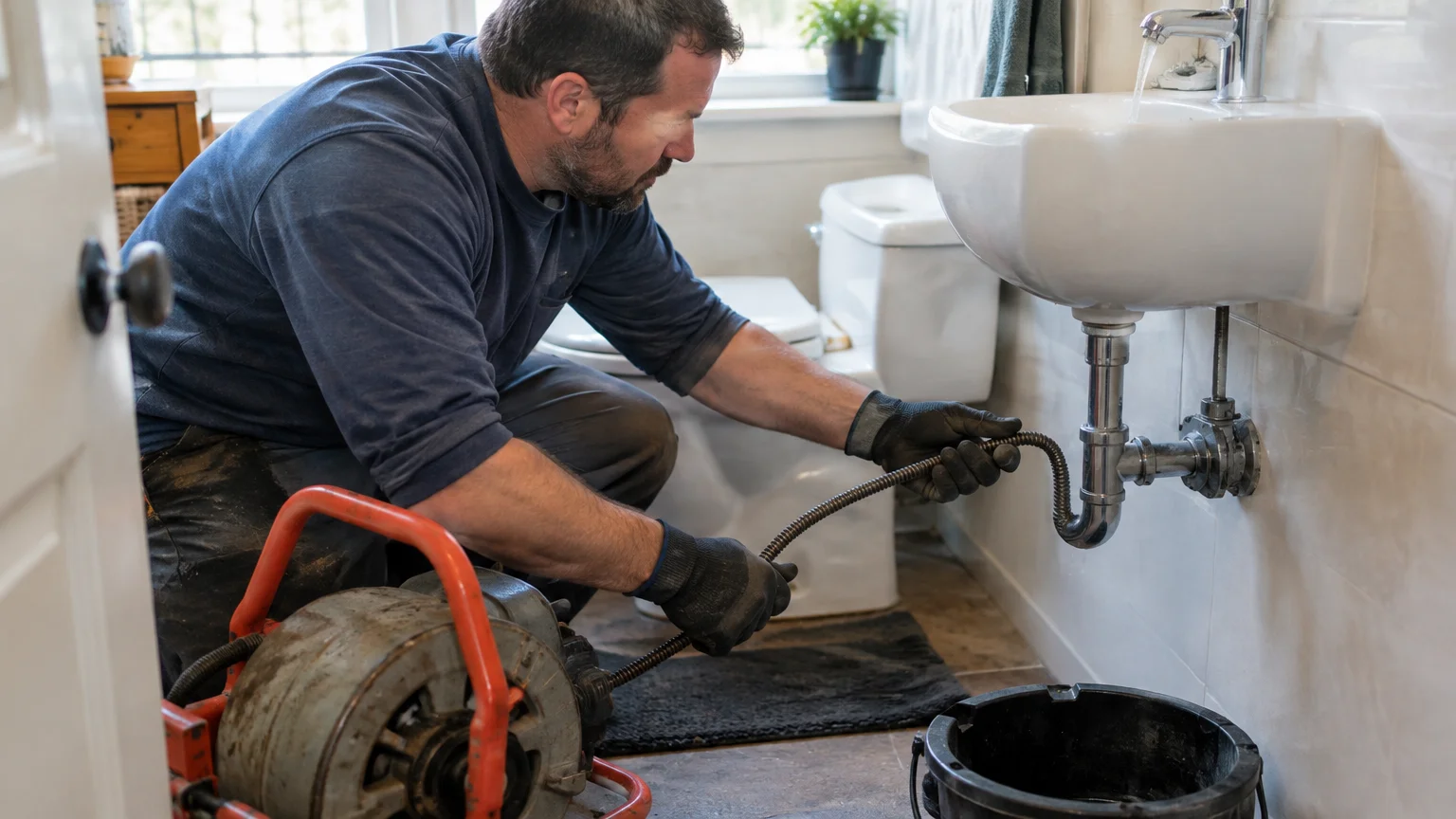
A plumbing snake is a flexible cable that clears many soft clogs in drain pipes. It moves through the pipe, reaches the blockage, and breaks it apart or pulls it out. This guide explains what is a plumbing snake, how it works, and when a simple tool is not enough. Deeper damage needs a licensed plumber from Cedar Park Plumbing.
Table of Contents
- What Is a Plumbing Snake?
- How Does a Plumbing Snake Work?
- What Types of Plumbing Snakes Are Available?
- When Should You Use a Plumbing Snake?
- How Do You Use a Plumbing Snake Safely?
- What Can a Plumbing Snake Not Remove?
- How Can You Prevent Recurring Drain Clogs?
- Frequently Asked Questions
- Key Takeaways
- Conclusion
What Is a Plumbing Snake?
A plumbing snake is a long, bendable tool for clearing blocked drains. It is also called a drain auger. The tool has a cable that travels inside the pipe. A handle, drum, or motor turns the cable as it moves forward.
A snake does not melt a clog like a chemical cleaner. Instead, its tip pushes through the blockage, breaks it apart, or catches material. This helps water flow through the pipe again. Plumbing snakes can help with sinks, tubs, showers, and toilets.
How a plumbing snake clears a blockage
The cable follows the open space inside a drain. When its tip reaches the clog, the user turns or powers the cable. The tip may pierce soft material, hook hair, or loosen grease and soap. Water can then pass through the opening.
A snake may only make a small path through the blockage. It may not scrub all buildup from the pipe walls. If the drain clogs again soon, the pipe may have heavy buildup, tree roots, or damage.
The main parts of a drain snake
Most drain snakes have a cable, a handle or motor, and a working tip. Some have a drum that stores the cable. The drum also helps the user guide the cable. Larger machines may have a foot switch and guide tube.
Cable size matters. A small cable fits narrow home drains. A larger cable is made for wider pipes and harder blockages. The wrong size can harm a fixture, trap, or pipe. Always read the tool instructions before use.
How Does a Plumbing Snake Work?
A plumbing snake sends a turning cable into a drain until it reaches a blockage. The cable then breaks, loosens, or catches the material. The user must control its speed and pressure. Too much force can harm a pipe or fixture.
How the cable reaches and breaks through clogs
Feed the cable into the drain a little at a time. Turning the handle helps the tip move around bends. Resistance may mean the cable has reached a clog, bend, or pipe fitting.
Do not force the cable. Gentle pressure and steady turning usually work better. When the tip enters the blockage, the cable may move farther into the pipe. You can then move it back and forth to open the drain.
Some tips have a corkscrew shape. They can catch hair and soft waste. Other tips bore into material or clear a wider path. A professional picks the tip based on the pipe size and clog type.
Manual, drill-powered, and motorized drain snakes
A manual drain snake uses hand power. It can work well for small clogs near sinks, tubs, and showers. A drill-powered model turns faster, but it needs care. Extra force can harm fittings or pipes.
A motorized drain machine handles larger or deeper blockages. It has more power and often carries a longer cable. These machines can be heavy and hard to control. They can also expose users to dirty water, sharp cable movement, and splashes.
A homeowner may not need a professional for a simple clog. For a stubborn blockage, repeated backup, or unknown pipe condition, professional Drain Cleaning Services are safer. Cedar Park Plumbing can help property owners choose a sound method without guessing at the cause.
What Types of Plumbing Snakes Are Available?
Plumbing snakes come in several sizes and designs. The best choice depends on the fixture, pipe size, clog location, and clog material. A small hand tool is not a replacement for equipment made for a sewer line.
When to use a hand auger or sink snake
A hand auger is a small manual snake for short, narrow drain lines. It may help with hair, soap, and light food waste. It is often used at bathroom sinks, tubs, and showers.
A sink snake may help when the trap is easy to reach. A trap is the curved pipe below a sink. It holds water and helps keep sewer gas out of the room. It can also collect debris.
A homeowner may remove and clean an easy-to-reach trap. Use a bucket and cloth to control the water. If the trap is stuck, cracked, or hard to reach, do not force it. Forcing the part may cause a leak.
When a toilet auger or drum machine is more suitable
A toilet auger is made for toilet bowls and their built-in trap. It has a guard that helps protect the porcelain. A standard sink snake may scratch the bowl. It may also fail to follow the toilet’s curved passage.
A drum machine fits longer drain runs and tougher clogs. It may help with main drain lines, business drains, or repeated backups. These tools need training and proper safety gear.
The wrong snake can push a clog deeper or become stuck. It can scratch a fixture, harm an old pipe, or break a weak joint. Choose a tool that matches the job. The strongest tool is not always the safest choice.
When Should You Use a Plumbing Snake?
A plumbing snake is most useful when one fixture drains slowly or stops because of a soft blockage. It may help when a plunger cannot clear the problem. First, identify which drain has the issue.
Drain problems a snake may solve
A snake may remove hair from a shower drain, food from a kitchen sink, or paper from a toilet. It may also clear soap near a tub drain. These problems often affect one fixture. The fixture may work better after the blockage is removed.
Useful signs include:
- One sink, tub, or shower drains slowly.
- A toilet bowl rises but does not overflow.
- Water backs up at only one fixture.
- A plunger helps the drain for a short time.
- The blockage began after debris entered the drain.
Never mix chemical drain cleaners with other products. They can make harmful fumes. Chemical liquid may also stay inside the pipe when a snake enters. Tell the plumber if you used a cleaner.
Signs the blockage may be deeper in the plumbing system
Several slow fixtures may point to a shared drain problem. Gurgling sounds, sewer smells, or water rising in a lower fixture can also signal a deeper blockage. The problem may involve a building drain or sewer line, not one sink trap.
A blocked drain plumber may need special tools to inspect the line. Repeated backups may point to tree roots, pipe damage, or heavy scale. A snake may open the line for a short time without fixing the main cause.
Emergency plumbing help matters when sewage enters the home or wastewater spreads across floors. It also matters when a backup threatens electrical equipment. Limit water use when needed. Avoid contact with dirty water.
Cedar Park homeowners, landlords, and business owners should take repeated backups seriously. A quick fix may not protect the property if water keeps returning. Good plumbing advice starts with finding the cause, not only opening the drain.
How Do You Use a Plumbing Snake Safely?
A homeowner can sometimes use a small manual snake for a simple, reachable clog. Safe use requires the right tool, slow movement, and protection for skin and eyes. A professional should handle powered machines, deep lines, and unknown pipe conditions.
Steps for snaking a household drain
- Remove standing water when possible and protect the work area.
- Put on gloves and eye protection before opening the drain.
- Remove the stopper or strainer without forcing it.
- Feed a small section of cable into the drain.
- Turn the handle while using gentle forward pressure.
- Pull the cable back slowly when it meets strong resistance.
- Clean the cable and repeat only if the blockage loosens.
- Run water slowly and check for leaks around the fixture.
Keep the cable under control at all times. Do not push the full length into a pipe without knowing where it goes. After use, wash the cable and let it dry. Store it where children cannot reach it.
Common mistakes that can damage pipes or fixtures
Forcing the cable is a common mistake. It can bend the cable, break a fitting, or push the clog farther into the line. A drill set at high speed can cause the same damage.
Do not snake a drain after pouring in strong chemical cleaner. The cable may bring the chemical back toward you. Also, do not remove parts that are hard to reseal.
Stop if the tool meets hard resistance, the pipe starts to leak, or the fixture moves. These signs call for professional help. Cedar Park Plumbing serves the main Cedar Park area, including Buttercup Creek and Anderson Mill West. The team also supports Leander, Brushy Creek, Jollyville, Round Rock, and nearby communities when a drain needs more than simple upkeep.
What Can a Plumbing Snake Not Remove?
A plumbing snake cannot repair a collapsed pipe or replace a broken fitting. It may also fail against tree roots, solid mineral scale, or a blockage caused by structural damage. Opening the drain does not fix the reason for the backup.
Blockages caused by tree roots, collapsed pipes, or heavy buildup
Tree roots can enter small openings in underground sewer lines. They can catch paper and waste as water passes. A snake may make a narrow path, but roots can grow back unless the damaged line gets proper treatment.
A collapsed pipe blocks water because the pipe no longer forms a clear channel. Heavy buildup can also shrink the opening over time. Old metal pipes may have rust, scale, or rough inner walls. These surfaces collect more debris.
Signs of a structural problem include repeated clogs, sewer smells, wet ground near a sewer line, and several fixtures backing up together. These issues need a proper check before repair work begins.
When drain cleaning or camera inspection is needed
Drain cleaning uses professional equipment to remove more buildup than a small home snake. A camera inspection sends a small camera through the line. It shows the location and condition of a blockage without guesswork.
A licensed plumber may suggest an inspection when the problem keeps returning. The plumber may check cleanouts, pipe connections, and the main sewer line. Sewer Line Repair may be needed when the camera finds a break, offset, or collapse.
The right next step depends on pipe material, access, damage, and location. Plumbing costs can vary with these details and with the urgency of the work. A quote should confirm the recommended work and final cost before repairs begin.
How Can You Prevent Recurring Drain Clogs?
The best way to prevent clogs is to keep solids, grease, hair, and harsh materials out of drains. Simple habits can protect home pipes and shared plumbing lines. Prevention cannot repair a damaged or poorly graded pipe.
Everyday habits that help keep drains flowing
Do not put cooking grease, oil, coffee grounds, bones, or stringy food in a kitchen sink. Use a strainer to catch larger pieces. Let grease cool and place it in a suitable container instead of pouring it down the drain.
Remove hair from bathroom drains often. A drain cover can catch hair before it reaches the trap. Toilets should receive only human waste and toilet paper. Wipes, paper towels, cotton products, and cleaning cloths can cause blockages, even when labels say they are safe to flush.
Helpful habits include:
- Clean sink and tub strainers often.
- Remove visible hair before it enters the drain.
- Flush kitchen lines with suitable amounts of hot water.
- Keep food scraps out of garbage disposals.
- Do not pour paint, chemicals, or oil into drains.
- Watch for slow flow and gurgling sounds.
When to call a licensed plumber for persistent problems
A licensed plumber should inspect a drain when clogs return, several fixtures slow down, or sewage backs up. Professional help is also wise when the property has old pipes, unknown repairs, or a suspected sewer issue.
Tenants should report repeated drainage problems to the property owner or manager. Investors and first-time buyers may want a plumbing inspection before making a major property choice. Early checks can find issues that are hidden at the fixture.
Homeowners can rely on Cedar Park Plumbing for guidance about blocked drains, sewer concerns, and related plumbing repair. Local conditions, pipe age, and property layout can affect the best plan. Cedar Park properties may also differ in pipe access and line design, so one fix may not fit every building.
Frequently Asked Questions
Is a plumbing snake the same as a drain auger?
Yes. Plumbing snake and drain auger are common names for a flexible cable tool. The tool clears blockages inside drain pipes. Some augers are small and hand powered. Others are large machines for longer pipes. The name does not always show the tool’s size or power.
Can a plumbing snake damage a pipe?
Yes, incorrect use can damage pipes, joints, traps, and fixtures. Too much force, high drill speed, or the wrong cable can cause problems. Old or weak pipes need extra care. Stop when resistance feels unusual. Seek help instead of forcing the tool.
Should a homeowner snake a clogged toilet?
A homeowner may use a toilet auger for a simple toilet blockage. A standard drain snake is not the best choice. It may scratch the porcelain or fail to follow the toilet trap. If the toilet keeps backing up, several fixtures are affected, or sewage appears, a licensed plumber should inspect the line.
Why does a drain clog again after snaking?
Snaking may open a path without removing all buildup. The clog may also come from tree roots, a damaged pipe, or a problem farther down the line. Repeated blockages need a deeper check. Professional drain cleaning or a camera inspection may find the cause.
When should a plumber handle drain cleaning?
A plumber should handle drain cleaning when the blockage is deep, severe, or recurring. Professional help is also needed for sewage backups, several slow drains, suspected pipe damage, or a drain that contains chemical cleaner. Trained workers have tools for larger lines and can lower the risk of pipe damage.
Key Takeaways
- A plumbing snake uses a flexible cable to reach and clear drain clogs.
- Small manual snakes can help with simple, reachable home blockages.
- Toilet augers protect toilet bowls better than general drain snakes.
- Repeated backups may point to roots, heavy buildup, or damaged pipes.
- A licensed plumber should inspect deep, recurring, or sewage-related problems.
Conclusion
A plumbing snake can solve some common drain problems when the blockage is soft, nearby, and easy to reach. It is not a cure for collapsed pipes, tree roots, or serious sewer damage. Careful use can protect fixtures and pipes, while repeated problems need a proper inspection.
For drain concerns in and around Cedar Park, Cedar Park Plumbing can help identify the next safe step. Contact us to discuss a blocked drain, sewer concern, or plumbing problem that has not stayed fixed.