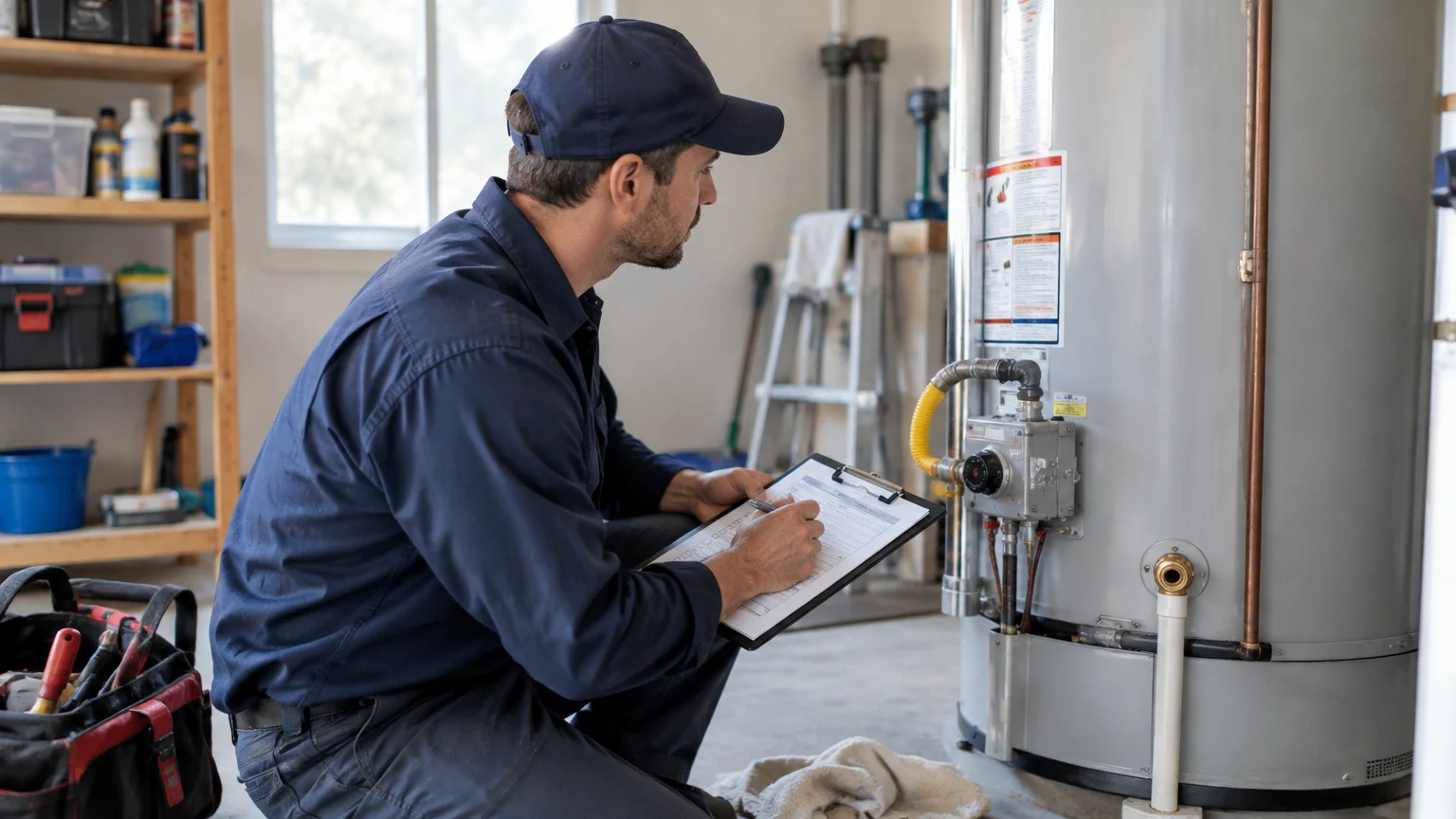
A water heater maintenance checklist helps you spot leaks, wear, and changes in hot water before they become bigger problems. Check the unit from a safe distance, follow the maker’s manual, and do not open parts or touch gas and wiring. Simple visual checks are often safe to do yourself in Cedar Park. Call a plumber for work on safety parts or hidden faults.
What does routine water heater maintenance include?
Routine maintenance means checking the heater and following the care steps in its manual. The right tasks depend on whether it stores hot water in a tank or heats water as it flows. A tankless water heater has different parts and care needs than a tank model. Cedar Park Plumbing can help property owners understand what upkeep suits their system.
Know your water heater type and check the manufacturer’s guidance
Start by finding the model label and reading the owner’s manual. It should name the unit type and explain safe use and care. A storage tank holds heated water in an insulated tank. A tankless unit heats water as it moves through the system. The manual may also explain how to check filters or plan service.
Do not guess if the manual is missing or hard to follow. A plumber for water heater repair can help identify the model and explain what it needs. Note the unit’s age, past repairs, and any changes in hot water. Keep these notes with the manual so they are easy to find later.
Gather basic safety precautions before inspecting the unit
Before looking closely, keep the space around the heater clear and dry. Do not touch wet wires, remove covers, or change gas controls. If you smell gas, leave without using switches or flames. Once outside, contact the gas utility or emergency services. The U.S. Consumer Product Safety Commission shares safety guidance about carbon monoxide and fuel-burning appliances.
You do not need a professional for simple visual checks or for keeping the area clear. But a qualified professional should handle gas lines, wiring, vents, and safety parts. Do not open a sealed panel or try to fix a leak. Staying safe matters more than finishing every check.
What should you check during a water heater maintenance inspection?
Use these ten checks to notice changes, not to take the heater apart. Stop if a task involves hot water, gas, wiring, or a valve you are unsure about. A visual check may show when to ask for water heater repair or another service. These steps apply to many water heaters, but the manual comes first.
Steps 1–5: Inspect for leaks, corrosion, ventilation issues, and temperature changes
- Look for water. Check the floor, pipes, and tank base for damp spots or puddles.
- Look for rust. Check visible fittings and the outside of the tank. Do not scrape or remove parts.
- Check the vent area. For fuel-burning units, look for blocked or loose vent parts from a safe spot.
- Notice hot-water changes. Write down if hot water runs out sooner or its temperature shifts without warning.
- Listen for new sounds. Popping or rumbling may point to sediment or another issue that needs a closer look.
Keep the space around the heater open so air can move and the unit can be checked. Do not store items against vents or controls. Low water pressure in the home may have another cause. A plumber can check whether the heater, pipes, or other plumbing parts are involved.
Steps 6–10: Check the pressure relief valve, flush sediment when appropriate, and review connections and controls
- Find the pressure relief valve. This safety part releases extra pressure. Do not test or use it unless the manual gives clear steps and it is safe.
- Ask if flushing is right for the unit. Sediment can gather in tank heaters, but hot water can burn or cause damage. Follow the manual or ask a plumber.
- Look at visible connections. Notice drips or fittings that look loose, but do not tighten parts while the heater is hot or running.
- Review outside controls. Note warning lights, error messages, or settings that seem to have changed.
- Write down what you find. Record the date and any changes in sound, leaks, or hot-water supply.
Tankless units may need filter care or checks for mineral buildup, based on the maker’s directions. Tank heaters may need different checks. Anode rod replacement can also be part of care for some tank models. The anode rod is a part that helps protect the tank from rust. Do not assume every unit needs the same task or schedule.
How often should a water heater be maintained?
Follow the owner’s manual first, since care needs differ by model. Water quality, household use, and heater type can also affect service needs. A busy home or a unit with hard-water buildup may need more attention than a system used less often. Keep notes so you can spot changes over time.
Adjust the schedule for water quality, usage, and heater type
Check the heater’s outside and the nearby floor from time to time, especially after a change in sound or hot-water supply. Read the manual for any set schedule for flushing, filter cleaning, or other care. Do not drain a tank just because a general list says to. The wrong steps can cause burns or harm the system.
Water conditions vary across Cedar Park and nearby areas, including Buttercup Creek, Anderson Mill West, Leander, Brushy Creek, Jollyville, and Round Rock. If mineral deposits return or a tankless unit shows a filter warning, ask a plumber what schedule fits your model. A plumber can also tell you if the system needs cleaning or repair. One schedule does not fit every home.
Know which maintenance tasks require a licensed plumber
Homeowners can keep the area clear, look for visible leaks, and note changes in how the heater works. Work on gas, electrical parts, vents, pressure relief valves, or internal parts needs professional care. Never use a flame to check for a gas leak. If you smell gas, leave and contact the right emergency help from a safe place.
A qualified plumber can check parts that are hard to reach and explain what work may be needed. For a tankless system, ask whether its setup affects venting or other parts of the home. A professional can also explain tankless hot water heater installation choices if you are thinking about a new unit. The right plan depends on the home, heater, and local rules.
When should you repair or replace a water heater?
A leak, repeated loss of hot water, or a safety concern needs prompt attention. Repair may make sense when one part has failed and the rest of the unit is in good shape. Water heater replacement may be worth discussing when problems keep returning or the system no longer meets the property’s needs. A plumber can check the unit before advising on either choice.
Warning signs and repair-versus-replacement decisions
Watch for water at the base, rust, odd sounds, weak hot-water supply, or changing temperatures. A leak near the bottom may come from the tank or a nearby pipe, so the source needs checking. Do not assume a puddle means the tank must be replaced. If water is spreading or near electrical parts, keep clear and seek urgent help.
The choice depends on the problem, the unit’s condition, its repair history, and how well it serves the home. A small part may be repairable. A damaged tank or repeated faults may point to replacement. Water Heater Installation can include choosing a tank or tankless model that fits the property and its hot-water needs.
Frequently Asked Questions
What should someone do if a water heater is leaking from the bottom?
Stay clear of hot water and nearby electrical parts. From a safe distance, look to see if water may be coming from a pipe or the tank. If the leak is active or spreading, seek plumbing help promptly. A plumber can find its source and advise whether repair or replacement is needed.
Can homeowners flush a water heater themselves?
Only do this if the maker’s manual gives clear directions and you can follow them safely. Water inside a heater can burn, and wrong steps can damage parts. If the steps are unclear or the unit has not been checked before, ask a licensed plumber to do the work.
How can someone check for a gas leak?
Never use a flame to check for gas. If you smell gas, leave the building without touching switches or using electronics inside. From a safe place, contact the gas utility or emergency services. Do not go back inside until responders say it is safe.
Does a tankless water heater need maintenance?
Yes, but its care steps differ from those for a tank heater. The manual may describe filter cleaning or checks for mineral buildup. A plumber can confirm the right plan for your model and check water heater repair needs if warning lights or hot-water problems appear.
Key takeaways
- Use the manual to guide care for your exact heater model.
- Keep the area clear and look for leaks or changes from a safe distance.
- Do not handle gas, wiring, or safety valves without proper training.
- Ask a plumber to review recurring problems and repair or replacement choices.
Conclusion
A steady care routine can help property owners notice changes early and avoid unsafe DIY work. Use this water heater maintenance checklist as a visual guide, then follow the maker’s instructions for your unit. Cedar Park Plumbing serves property owners and can assess a heater that leaks, makes new sounds, or fails to supply steady hot water. Contact us to discuss the next step for your property.