Leaking faucet repair means finding why water drips or runs when the tap is off, then fixing worn parts or replacing the faucet so the leak stops. How complex the job is depends on faucet type, how easy it is to reach, and whether there is hidden water damage that also needs plumbing repair.
A slow drip in the kitchen sink is easy to ignore. Then one day the sound seems louder, the handle feels loose, and the cabinet base in your Cedar Park home is spotted with water. At that point, a small faucet leak has become a real plumbing problem that can damage wood, drywall, and finishes.
This guide explains leaking faucet repair in clear steps. It shows how to tell a minor drip from a serious issue, what usually causes leaks, which fixes many owners can do, and when a plumber from Cedar Park Plumbing should step in to protect your property. The tips work for homes, rentals, and small businesses.
Table of Contents
- What counts as a leaking faucet problem that needs repair?
- Why is my faucet leaking in the first place?
- What types of faucets leak differently and how does that affect repair?
- Is it worth repairing a leaking faucet or should I replace it?
- How much does leaking faucet repair usually cost?
- Can I fix a leaking faucet myself or do I need a plumber?
- What tools and parts are needed for basic leaking faucet repair?
- How do you repair a leaking faucet step by step?
- How can I prevent my faucet from leaking again after it’s fixed?
- When does a leaking faucet signal a bigger plumbing problem?
- Frequently Asked Questions
- Key takeaways
- Conclusion
What counts as a leaking faucet problem that needs repair?
A leaking faucet is more than an annoying sound. It is any faucet that lets water drip, stream, or seep when the handle is in the off position. In sinks, tubs, showers, and utility rooms, even a small leak shows that parts inside the faucet are worn or damaged.
Kitchen sinks often start with a drip from the spout. Bathroom faucets may leak around the base of the handle or where the spout meets the sink. Laundry and utility sinks can drip from hose bibs, side sprays, or connections under the sink. All of these count as faucet leaks.
Some leaks are easy to see. Others are hidden and only show as stains, soft drywall, or a musty smell. A faucet that only drips once every few seconds is still a leak and still wastes water. The United States Environmental Protection Agency notes that household leaks can waste a large amount of water per home each year when left unfixed [EPA WaterSense].
The key is to tell a simple drip from a sign of deeper trouble. A minor drip that only comes from the spout and stops when you move the handle is often due to a worn washer or cartridge. A leak that runs down into the cabinet, soaks the wall, or shows up as a wet ceiling below is more serious.
Common types of faucet leaks in kitchens, bathrooms, and utility rooms
Most homes in Texas see the same leak patterns over time:
- Steady drips from the end of the spout
- Drips or puddles at the base of the faucet
- Water that runs from around one or both handles
- Water that seeps from supply connections below the sink
In the kitchen, pull-down and pull-out spray faucets can leak where the hose meets the spray head, or where the hose rubs against sharp cabinet edges. A garbage disposal under the sink may also leak at the connection to the drain, which many owners mistake for a faucet leak at first glance.
In bathrooms, common leaks come from centerset or widespread sink faucets, tub spouts that drip after the shower is off, and shower valves hidden in the wall. Laundry rooms and garages often have older utility faucets with worn packing nuts that allow constant drips.
How to tell the difference between a minor drip and a serious plumbing issue
A minor drip is steady but slow. It comes from the faucet spout or around a handle, but it does not soak cabinets, drywall, or floors. You may see a ring in the sink or tub where drops hit but no standing water below.
A serious issue will leave clear damage. You might see damp or swollen wood in the cabinet, flaking finish on the faucet body, or water marks on the ceiling of the room below. You may also notice low water pressure in the house, banging pipes, or stains near shutoff valves.
If turning the handle harder or moving it side to side changes the leak a lot, the faucet’s internal parts are badly worn. If dripping continues after the local hot and cold shutoff valves are fully closed, one or both valves may not be isolating the faucet properly. At that point, a full plumbing inspection from Cedar Park Plumbing is the safest step.
Why is my faucet leaking in the first place?
Most faucet leaks start with small worn parts. Inside every faucet there are components that hold back water until you turn the handle. Over time, water pressure, grit in the water, and everyday use wear these parts out so they can no longer seal.
Older compression faucets use rubber washers that press against valve seats to stop flow. After years of use these become hard, cracked, or thin, which allows drips even when fully closed.
Newer faucets use cartridges, ceramic discs, or rubber seals called O-rings. A cartridge is a removable part that moves up and down or side to side to control water. O-rings are small rubber circles that seal space between metal parts. When these dry out, crack, or break, water escapes.
Wear and tear on washers, cartridges, and O-rings explained
Think of a faucet washer or O-ring like a soft rubber door seal. It has to stay flexible to press tightly against metal parts. Hot water, cleaning chemicals, and minerals in hard water all make this rubber stiff over time.
Cartridges have several seals and moving pieces built in. When grit from old pipes or hard water gets inside, these parts can scratch and no longer fit tightly. This makes it harder to shut the faucet off all the way and leads to drips.
Ceramic disc faucets have two hard, flat ceramic pieces that slide over each other. They are very tough, but if debris gets between them, tiny chips can form and allow leaks. A failed ceramic disc often shows up as a faucet handle that feels rough or hard to move.
Other hidden causes: water pressure, hard water, and installation mistakes
High water pressure puts more strain on faucet parts all day and night. If pressure is too high, even a brand-new faucet can start to drip or develop leaks sooner than expected. A simple pressure test by a plumber can show if this is part of the problem.
Hard water means the water has a lot of calcium and magnesium. These minerals leave white scale on faucet spouts and inside cartridges. Over time, scale makes handles stiff, clogs small openings, and damages seals.
Installation mistakes are another hidden cause. A faucet that was not aligned, tightened, or sealed correctly may leak soon after it is installed. Cross-threaded connections, missing or pinched gaskets, and badly sealed drain assemblies can all lead to water where it should not be.
In some cases, leaks that seem like faucet issues are actually tied to other parts of the system, such as Toilet Repair needs, Water Heater Repair problems, or gas line issues that require professional attention. A full check of the plumbing system helps uncover these links.
What types of faucets leak differently and how does that affect repair?
Different faucet designs fail in different ways. Knowing what type of faucet is in your kitchen, bathroom, or laundry room helps you guess what is wrong and how hard leaking faucet repair will be. The four main types are compression, cartridge, ball, and ceramic disc.
Compression faucets are older designs with two handles. You turn one for hot and one for cold. Inside, each handle presses a washer against a valve seat. These faucets often drip from worn washers, and handles can become hard to turn or may not shut all the way.
Cartridge faucets can have one handle or two. They use a single replaceable cartridge for each handle or for both hot and cold. Ball faucets have a single handle and use a metal or plastic ball with small seals and springs. Ceramic disc faucets usually have a wide, short handle and a smooth feel.
Compression, cartridge, ball, and ceramic disc faucets: how each one works
- Compression faucets work like a lid screwed onto a jar. Turn the handle down and it presses the washer tight to stop water. Loosen it and water flows. Most repairs focus on new washers, valve seats, or packing around the stem.
- Cartridge faucets work like a sliding plug. Inside, the cartridge moves to open or close water paths. When it fails, you replace the entire cartridge. This repair is often cleaner and faster than rebuilding a compression faucet, as long as you match the exact part.
- Ball faucets use a hollow ball with holes that line up with hot and cold water inlets. Springs and small rubber seats press against the ball. When these wear out, leaks often show up around the spout base or handle. Kits with seats, springs, and seals are common.
- Ceramic disc faucets let water flow when two flat discs line up. They are very durable and handle hard water better than many types. When they leak, the fix often involves replacing the whole cartridge that holds the discs and seals.
Which faucet styles are usually worth repairing versus replacing
Compression faucets are simple and often worth repairing if they are in good shape and match the room style. Very old or corroded units may not be worth the effort.
Cartridge and ceramic disc faucets are usually worth repairing when they are fairly new, match other fixtures, or are higher-end brands. A new cartridge can add years of life. If the finish is pitted or the spout is cracked, replacement makes more sense.
Ball faucets are less common in new builds today. When a ball faucet is very old, it may be smarter to replace it with a modern cartridge or ceramic disc faucet that uses less water and is easier to service.
Owners in the Cedar Park area should also think about future plans. If a kitchen or bath remodel is coming soon, a fast, basic repair may be enough for now. If the room will stay as it is, upgrading to a quality, water-efficient faucet can be a long-term win.
Is it worth repairing a leaking faucet or should I replace it?
The choice between repair and replacement depends on age, condition, style, how easy parts are to get, and how often the faucet has failed before. A plumber will look at all of these, plus signs of water damage, when giving options.
Start with the age of the faucet. A newer faucet that matches the rest of the room and has not needed many repairs is almost always a repair candidate. Replacing a worn washer, cartridge, or seal can solve the problem and protect the sink, counter, and cabinet.
Very old faucets, especially those with corroded bodies or handles, are harder to repair well. Screws seize, parts break during removal, and matching trim is tricky. If parts are no longer made or are hard to find, replacement is often more practical.
Key questions to decide between repair and replacement for homeowners
Homeowners and landlords can run through a simple checklist before they decide. Helpful questions include:
- How old is the faucet and does it still look good?
- Have I repaired this same leak more than once before?
- Are quality parts easy to find for this brand and model?
- Is there any rust, pitting, or cracking on the faucet body?
- Is there hidden water damage under or behind the sink?
If the faucet is fairly new, in good shape, and this is the first leak, repair is usually the smart call. If there is clear damage or a pattern of repeated leaks, a new faucet often gives better value and less stress.
Business owners also weigh looks and downtime. In a restaurant, office, or rental unit, a faucet that leaks often or looks worn can hurt comfort and cleanliness. In those settings, upgrading to durable commercial fixtures can cut service calls.
When upgrading to a new water-efficient faucet makes more sense long term
Modern faucets are available in water-efficient designs. When choosing one, compare its water-use specifications, compatibility, and manufacturer information. Upgrading during a leak repair can lower long-term water use.
A new faucet can also handle hard water better and include features like ceramic disc valves and flexible supply lines. This can mean fewer leaks, smoother handles, and less risk of sudden failures.
If counters, sinks, and backsplashes are also old, replacing the faucet as part of a small Kitchen Plumbing or bathroom update may be the most practical way to get a fresh, leak-resistant setup. A plumber can help match faucet style, finish, and number of holes to the current sink.
Owners in Cedar Park should also think about future buyers. Newer, efficient faucets are small upgrades that help homes and rentals feel well cared for to tenants and first-time buyers.
How much does leaking faucet repair usually cost?
Leaking faucet repair is often one of the simpler plumbing jobs, but the total amount you pay still varies. The main drivers are the faucet type, how easy it is to reach, the cost of parts, and whether there is any hidden damage that also needs repair.
A basic drip from a compression or cartridge faucet with good access is usually on the simpler end. Replacing a washer, O-ring, or cartridge tends to be a lighter job than tracking down leaks in walls or ceilings. Specialty faucets, wall-mounted units, and tub or shower valves usually take more time.
Luxury faucets with custom parts often cost more to fix because parts are more specialized and may need to be ordered. Older faucets with corrosion may take longer to disassemble. That extra time adds to the overall job even though the actual replacement pieces are small.
Main factors that influence the price of fixing a leak
When a plumber from Cedar Park Plumbing inspects a leak, they consider several points. These include:
- Faucet type and brand (standard vs. specialty)
- Location and access (open cabinet vs. tight or hidden space)
- Condition of shutoff valves and supply lines
- Amount of scale, rust, or corrosion present
- Any extra repairs needed (like Leaks & Burst Pipes work, drywall, or cabinet fixes)
A simple faucet repair with no water damage tends to be one of the lighter plumbing jobs. Work that involves cutting walls, repairing damaged wood, or replacing multiple valves is closer to larger plumbing projects.
Compared to full Kitchen Plumbing remodels or Water Heater Repair jobs, most faucet repairs are smaller and shorter. However, the only way to know the exact cost is to have a plumber inspect the faucet and give a written quote for that specific situation.
How faucet repair compares with full replacement and other plumbing jobs
Repairing a leaking faucet is usually less expensive than replacing the entire faucet, especially for mid-range models in good shape. Replacement adds the cost of the new faucet and extra labor to remove the old one and install the new unit.
Full faucet replacement may still be the better value when an old faucet has many problems at once, such as leaks, low water flow, and worn finish. In these cases, paying once for removal and installation can make more sense than several small repairs over time.
Compared with major plumbing work, like drain repair, large pipe repair, fixing serious gas leaks, or doing a large toilet repair, faucet jobs are on the lighter side. Still, they matter. Fast leaking faucet repair helps stop extra damage that could lead to bigger, more costly work later.
Can I fix a leaking faucet myself or do I need a plumber?
Many small faucet leaks are within reach for handy homeowners and tenants. If you can safely shut off water, use basic tools, and follow simple steps, you may be able to stop a simple drip on your own.
Safe DIY work includes changing faucet aerators, tightening loose handles, and replacing simple O-rings or washers on easy-to-access faucets. These tasks do not involve cutting pipes or working near gas, and they stay outside walls and ceilings.
However, more complex leaks require a qualified plumber. When leaks involve hidden pipes, main shutoff valves, or signs of structural damage, professional training and tools are needed to find and solve the root cause without causing more harm.
Simple DIY leaking faucet repairs most homeowners can handle safely
There are a few basic steps almost any homeowner can do to help with minor dripping. These include:
- Turning off the local shutoff valves under the sink
- Plugging the sink drain so small parts do not fall in
- Removing and cleaning the aerator on the faucet spout
- Gently tightening loose handle screws or decorative caps
- Replacing simple rubber washers or O-rings when the faucet design is clear
Owners should always take photos before taking things apart. This makes it easier to put parts back in the right order. It is also wise to lay out small pieces in the order they came off.
Simple checks like looking for low water pressure in a house or resetting a garbage disposal can also be safe DIY steps when done with care and clear instructions. If you smell gas or suspect a gas leak, avoid flames and electrical switches, leave the area, and contact the gas utility or emergency services from a safe location.
Clear signs you should call a professional plumber right away
Some warning signs show that a leak is beyond simple repair. Call Emergency Plumbing help if you see any of these:
- Water that will not stop even after local valves are off
- Warm or soft spots on floors, walls, or ceilings
- A running toilet, faucets, and other fixtures misbehaving at the same time
- Signs of mold, mildew, or strong musty smells
- Corroded or crumbling shutoff valves you cannot safely turn
If you start a repair and find broken parts you cannot remove, damaged threads, or pieces you cannot identify, it is also time to stop and call a pro. For rental properties or commercial spaces, owners should use qualified plumbers and check applicable building rules to help protect tenants.
What tools and parts are needed for basic leaking faucet repair?
Before starting any faucet repair, it is smart to gather tools and parts. Having what you need on hand helps prevent mid-job trips to the store and reduces the chance of leaving the faucet partly taken apart overnight.
Different faucet types need different parts, but many basic hand tools are the same for all. A simple kit kept in a Cedar Park home or small business can handle many basic jobs and make emergency shutoffs faster and safer.
It is also wise to know how to turn off the main water supply to the building. This gives a backup plan if old or stuck shutoff valves under a sink fail or start to leak during the repair process.
Essential hand tools for safe faucet repair and shutoff
Helpful tools for most leaking faucet repair jobs include:
- Adjustable wrench or basin wrench for hard-to-reach nuts
- Phillips and flathead screwdrivers for handle screws and trim
- Allen (hex) keys for set screws on many modern faucets
- Pliers for gripping parts and pulling cartridges
- Utility knife for cutting old sealant around faucet bases
- Bucket, towels, and a flashlight to catch and see leaks clearly
A non-contact voltage tester can also be useful near garbage disposals and under-sink outlets, to make sure power is off before working in tight spaces. Safety glasses and light gloves help protect eyes and hands from debris and sharp edges.
Common replacement parts for different faucet types and how to match them
The most common replacement parts for faucet leaks are washers, O-rings, cartridges, ceramic disc cartridges, and seat-and-spring kits. Matching parts to your faucet is key. Taking the old part to the plumbing aisle or supply house often works best.
For compression faucets, you will likely need new rubber washers, valve seats, and maybe packing material for the stem. For cartridge faucets, you replace the entire cartridge unit that controls water flow. Ball faucets often use kits that include a new ball, springs, and seals.
Ceramic disc faucets may use brand-specific cartridges. Many brands print their name on the faucet body, under the handle, or on the escutcheon. Writing down the brand, approximate age, and any model numbers helps find the right part.
Landlords and property managers in the main Cedar Park area — from Buttercup Creek and Anderson Mill West to Leander, Brushy Creek, Jollyville, Round Rock, and nearby communities — often keep a small stock of common parts for fixtures used across their buildings. This can cut downtime when a leak shows up in a tenant’s unit and help keep Toilet Repair and faucet calls faster and smoother.
How do you repair a leaking faucet step by step?
Every faucet model is a little different, but the basic steps to repair a leak are similar. First, you find where the leak is coming from. Then you shut off water, take the faucet apart in an orderly way, replace worn parts, and reassemble it.
During each step, move slowly and avoid forcing stuck parts. Many faucet bodies are made from softer metals that can scratch or warp if handled roughly. Take photos as you go, and keep pieces in order on a clean towel.
If at any point you feel unsure, or if the faucet will not come apart without serious force, stop the DIY attempt and call a plumber. It is easier for a professional to help before parts are broken than after.
Step-by-step process to diagnose where the faucet leak is coming from
- Watch the leak closely. Note if water drips from the spout, around a handle, or under the sink.
- Dry the area. Use a towel to dry the faucet, handles, and cabinet below.
- Turn the faucet on and off. See if the leak changes when the handle moves.
- Check under the sink. Look at supply lines, shutoff valves, and connections for moisture.
- Check related fixtures. If other fixtures have issues, like a toilet that keeps running or very low water pressure, the problem may be in the broader plumbing system.
- Decide on access. If the leak is clearly from the faucet body or handle, proceed. If it seems to come from inside a wall or deep behind the sink, call a plumber.
Step-by-step process to replace worn cartridges, washers, and seals
- Shut off water. Close the hot and cold shutoff valves under the sink. Open the faucet to release pressure.
- Plug the drain. Use a stopper or cloth so small parts do not fall in.
- Remove handle caps and screws. Use a small screwdriver or Allen key. Lift off handles gently.
- Take off trim and nuts. Use wrenches and pliers as needed, taking care not to scratch finishes.
- Remove the old cartridge, stem, washer, or O-rings. Note their position and orientation.
- Clean the faucet body. Wipe away debris and mineral scale. Do not scratch sealing surfaces.
- Install new parts. Place the new washer, O-rings, or cartridge in the same way as the old parts.
- Reassemble the faucet. Reverse the steps, tightening nuts snugly but not too hard.
- Turn water back on. Open shutoff valves slowly while watching for leaks.
- Test the faucet. Run water hot and cold, then shut it off and watch for drips.
If the leak is gone and handles move smoothly, the repair was likely a success. If dripping continues, or if new leaks appear under the sink, a more detailed inspection or professional help is needed.
How can I prevent my faucet from leaking again after it’s fixed?
Preventing future leaks starts with gentle use and simple care. Turning faucets off firmly but not too hard, keeping aerators clean, and watching for early signs of trouble all help extend the life of washers, cartridges, and seals.
Water quality and pressure also play a big role. Hard water and high pressure speed up wear on faucet parts, water heater components, and toilet fill valves. Simple checks and basic equipment can help control these forces and protect your fixtures.
For busy homes, rentals, and light commercial spaces, a regular plumbing checkup can catch small leaks before they lead to high water bills or damage. This is especially helpful when there are many sinks and toilets to watch.
Routine maintenance habits that protect faucets and internal parts
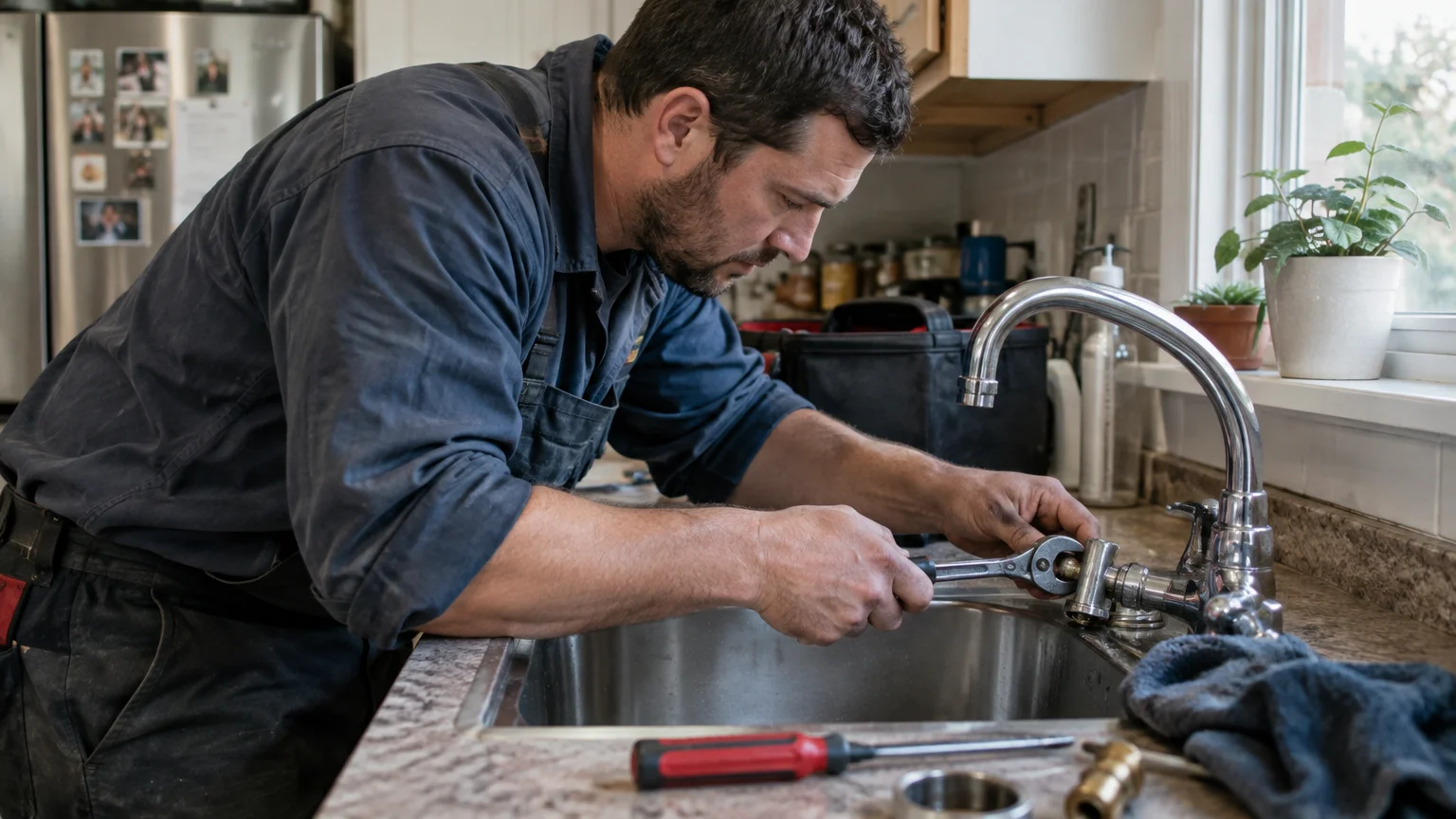
A few easy habits can keep faucets in better shape:
- Clean aerators every few months. Unscrew them, rinse out debris, and reinstall.
- Wipe away scale. Use a mild cleaner to remove mineral buildup on spouts.
- Check handles for looseness. Tighten small screws before wobble gets worse.
- Open and close valves gently. Avoid slamming handles closed.
- Look under sinks twice a year. Watch for damp spots, staining, or musty smells.
When you notice changes, such as a faucet that starts to drip sometimes or a handle that becomes harder to move, address these small warnings early. Early attention is almost always easier and less costly than waiting.
Water quality, pressure control, and other system checks that reduce leaks
Installing a simple whole-house filter or softener can reduce grit and minerals that scratch faucet parts. Good filtration also helps protect water heaters, shower valves, garbage disposal units, and other fixtures from early wear.
A pressure-reducing valve, where allowed and suitable, can help keep water pressure within a safe range for fixtures. A plumber can test pressure at an outdoor spigot or laundry faucet and advise if control equipment is needed.
Other system checks include confirming that water heater temperature and pressure relief valves work correctly, having a qualified professional inspect gas piping when it is near plumbing work, and watching for signs of leaks in walls or slabs. Many of these checks fit well into a yearly plumbing inspection visit.
When Toilet Repair, Water Heater Repair, and leaking faucet repair are handled as part of an overall plan, the whole plumbing system in a Cedar Park property tends to work more reliably and with fewer surprises.
When does a leaking faucet signal a bigger plumbing problem?
Sometimes a faucet leak is just a faucet issue. Other times, it is a hint that the plumbing system has broader problems, such as failing pipes, worn shutoff valves, or supply line issues. Knowing these warning signs helps owners act early.
If several fixtures act up at once, there is likely more going on than one worn washer. For example, a kitchen faucet drip at the same time a toilet keeps running and a shower loses pressure can point to pressure problems or aging pipes.
Leaks that stain ceilings or walls, or that show up near electrical equipment, are also red flags. These cases call for fast, professional help to avoid structural damage and safety risks.
Warning signs the leak is tied to supply lines, valves, or hidden pipe damage
Watch for these signs that a leaking faucet may be part of a larger issue:
- Wet or swollen cabinets and baseboards near the sink
- Water stains on ceilings or walls below or behind the faucet
- Rust or green corrosion on visible pipe joints and valves
- Very low water pressure in a house or sudden changes in flow
- Sounds of water running even when all fixtures are off
These clues can point to failing supply lines, loose or damaged shutoff valves, or leaks in copper, PEX, or galvanized piping. In older homes, it may also hint at outdated materials that need careful inspection.
How a local plumbing expert can inspect, diagnose, and protect your property
A plumbing professional does more than swap parts. They look at how all fixtures, shutoff valves, and pipes work together. For a leaking faucet, they may test water pressure, inspect under-sink valves, and use moisture meters or cameras to look for hidden leaks.
Cedar Park Plumbing can help homeowners, landlords, and small business owners decide which options fit best: focused leaking faucet repair, wider Leaks & Burst Pipes work, or fixture upgrades. They can also advise when it is time to repair a toilet fill valve, address ongoing garbage disposal unit repair needs, or plan larger pipe work.
With the right diagnosis, property owners can prioritize repairs, avoid repeat leaks, and protect finishes, contents, and structure from water damage.
Frequently Asked Questions
Why does my faucet keep dripping after I turn it off?
A faucet that keeps dripping after shutoff usually has worn internal parts. Washers, cartridges, or O-rings are no longer sealing fully, so a little water slips by. High water pressure or hard water can speed up this wear. Replacing the worn parts often solves the leak.
Can a leaking faucet increase my water bill a lot?
Yes. Even a slow drip adds up over time. Each small drop is treated water that runs down the drain. Over weeks and months, that wasted water can raise bills more than many owners expect. Fixing leaking faucet repair issues early helps lower waste and costs.
Is it safe to use my sink if the faucet is leaking from the base?
Using a sink while a faucet leaks from the base is risky. Water can run under the faucet, into the cabinet, and down into walls or floors. This hidden moisture can damage wood and drywall and may lead to mold growth. It is best to stop and get the leak fixed.
How do I know if I should repair or replace my old faucet?
Look at age, condition, and history. If the faucet is newer, in good shape, and this is the first leak, repair makes sense. If it is very old, corroded, hard to use, or needs frequent fixes, replacement is often the better long-term choice.
Could other plumbing issues be linked to my leaking faucet?
Yes. A leaking faucet can be a sign of high water pressure, aging supply lines, or shutoff valves that are starting to fail. If you also notice low water pressure, toilets that keep running, or other leaks, a whole-system plumbing check is a smart next step.
Key takeaways
- A leaking faucet is more than a nuisance; it is a real plumbing problem that can damage cabinets, walls, and ceilings over time.
- Most leaks come from worn washers, cartridges, and seals, but high pressure, hard water, and bad installation can also play a role.
- Simple leaks on easy-to-reach faucets may be DIY-friendly, while hidden or widespread issues call for a qualified plumber.
- Regular checks, gentle faucet use, and good water quality help prevent repeat leaks and protect the whole plumbing system.
- Fast leaking faucet repair, together with timely Toilet Repair and Water Heater Repair, keeps homes and businesses safer and more comfortable.
Conclusion
Leaking faucet repair is one of the most common plumbing needs for homes, rentals, and small businesses, but it touches many parts of the wider plumbing system. By learning how to spot serious leaks, handle simple care, and know when to call a pro, property owners in Cedar Park can protect finishes, avoid mold, and cut water waste. For clear answers, careful diagnosis, and help with faucets, toilets, disposals, and more, Cedar Park Plumbing is ready to help.
If you are not sure what you are dealing with, it is worth having someone look at it before it turns into a bigger job.
If you are not sure what you are dealing with, it is worth having someone look at it before it turns into a bigger job. Get in touch with Cedar Park Plumbing today and we will tell you where you stand.